They Turned Them Back in Stalingrad

From the mind and memory of Dr. Michelle Harrison

“They Turned Them Back In Stalingrad!”

The year was 1942. My mother had gone into labor on Thanksgiving, the 26th of November that year, and had delivered me in the afternoon of the 27th. The following morning my father came to visit her in the hospital. He leaned over to kiss his beautiful young wife, and with pride and joy announced, “They turned them back in Stalingrad!” She said, “But David, the baby…” “Well,” he told her reassuringly, “there is always plastic surgery.” I had first appeared to the world in the shadows of World War II, and with my face a bit caved in.

My appearance was a terrible shock to my mother, as the nurses had initially, and mistakenly, brought her a beautiful ten-day-old red haired boy. She adored him for the hours he was with her. I do not joke, but on my 60th birthday she was still remembering and talking about that baby, how beautiful and perfect he was, how happy she was holding him, talking to him, how shocked she was when they brought me to her. Part of her shock was guilt. She blamed herself for my face because, “no one taught me how to give birth.”

So, by the time I was one day old, there were stories to tell, stories and themes, personal and political, that would be with me throughout my life. As for my face, it mended on its own, probably within a day or two, but that part of the story is never told. I think I just had an ordinary newborn smushed-in face. To my mother though, I never really looked right. She longed for the “perfect” ten-day-old red haired boy she had held in the hours after giving birth. She also longed for a son, which she never had.

I have another day-of-my-birth story. I became a doctor. One focus of my work was the early relationships of mother and child, in pregnancy, childbirth, and the newborn period. I once participated in a meditation and hypnosis seminar where we were supposed to regress back to our lives before we were born. But I could only get back as far as my birth. The delivery room was cold and gray. I saw myself being born; I looked around and there was my mother, frightened, lying on the table. Then the doctors were holding me upside down, dangling me by my feet as was the custom. I was screaming and screaming at the top of my lungs, “You are doing it wrong! You are doing it wrong!” No one was listening to me.

In 1982, I published a book, A Woman in Residence (Random House 1982; Penguin 1994), an autobiographical account of my training in Obstetrics and Gynecology. It is an expose; it is about the institutionalized abuses of women; it is about how childbirth should be practiced, not how it is practiced. It is my strongest voice, and the words no one listened to in the hospital room forty years before. I am persistent. I have the memory of an elephant, and the tenacity of a mother searching for her lost children.

Michelle Harrison

9/11 – When Did I Know?

When I was a kid I would sometimes wake up in the morning and turn on the radio next to my bed and hear of events I’d just seen in my dreams. They were always major events, like earthquakes, fires, floods. I assumed I was just sensitive to radio waves. Later when I was doing home deliveries of babies, I often had dreams about the birth that predicted what would happen. I published them. (Pre-Birth Communication, Michelle Harrison, M.D.; Mothering; Summer 1980, No.18). Sometimes I just know things.

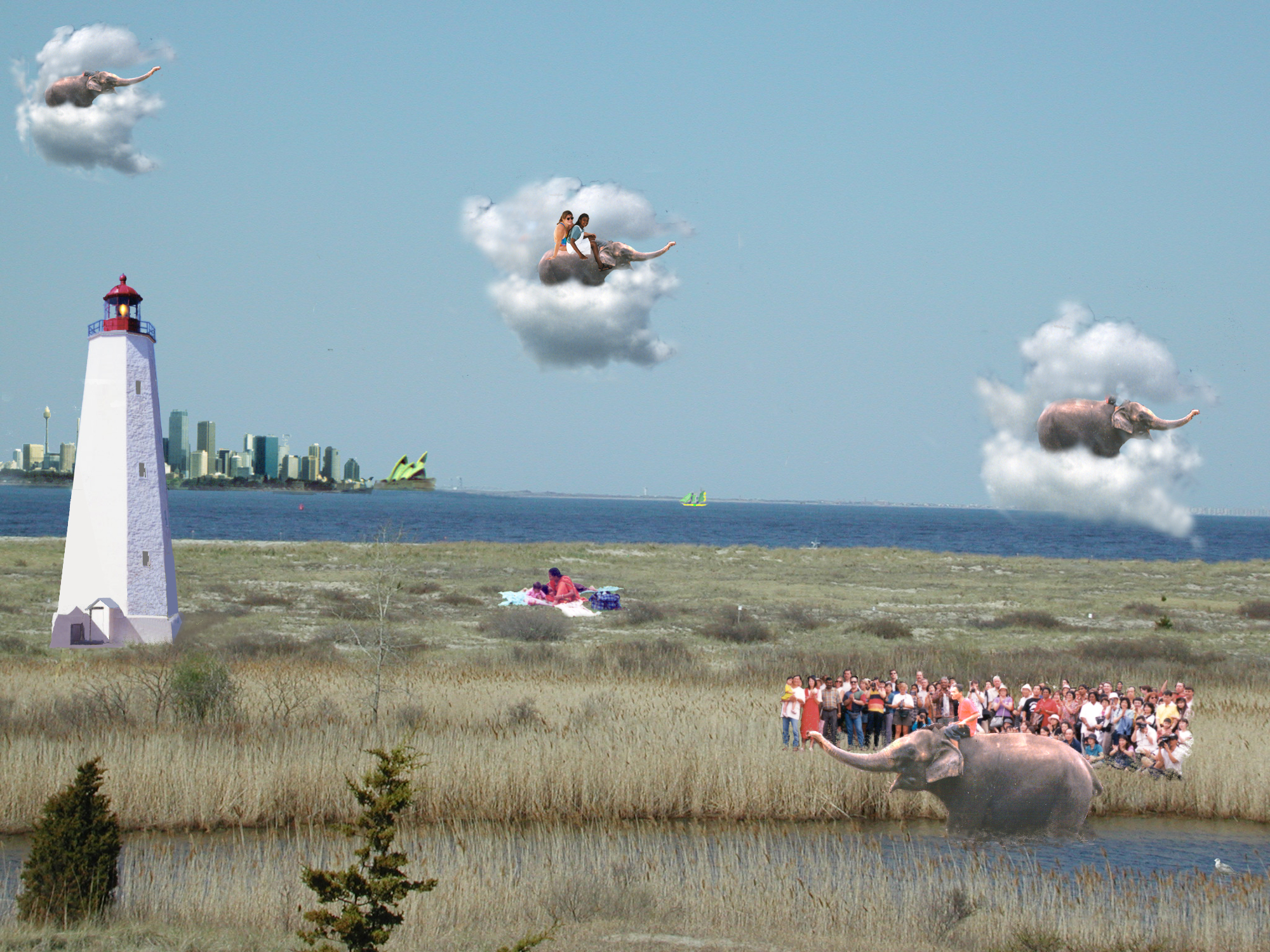
NYC skyline with Twin Towers replaced by Sydney Opera House done Spring 2001, before 9/11

This is a photshopped picture I created in the Spring of 2001. I was taking photography and photoshop courses at Raritan Valley Community College. The assignment was to take a picture and then show how it would be different in the future. I started with New York City taken from New Jersey across the bay. I moved the Sandy Hook Lighthouse close to the shoreline. Over the previous 250+ years, water had receded and it was further inland, so I moved it. Then I looked at the twin towers and said to myself, they aren’t going to be there. I didn’t know why. I moved the Sydney Opera House to replace the Twin Towers. When I’d asked myself what the skyline would look like, I saw Australia becoming closer to New York, as if somehow shifting across the oceans, or a thick belt tightening the Earth’s girth.

September 11, 2001 (9/!!) happened just a few months later. I watched as a plane flew into the tower at 9:10 in the morning. I saw the city covered in ash, subway exits looking exactly like scenes from the repetitive nightmares of my childhood. It was as though I had been expecting this all my life.

There were political battles over the site and what would be a suitable memorial. One proposal had even been to build a Ground Zero Mosque. It reminded me of the Taj Mahal built over a Hindu Shiva Temple. It’s what conquering armies do to mark their territory.

I hadn’t thought about my photo in years, but on the 12th November 2023, twenty two years after 9/11, I read, “Anti-Israel Protestors Shout ‘Gas the Jews’ Outside Sydney Opera.”

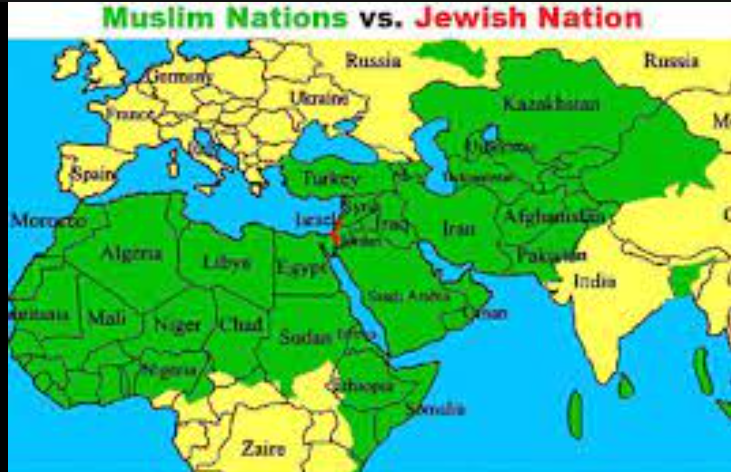
From Sydney Australia to New York’s bridges and streets and universities, around the world and back, those hateful cries were heard. This is not a war about a little piece of land. The battles today are in that red speck of land in the middle of the grean sea of Islamic nations.

This is a war that began 1600 years ago. Will we win? I don’t know because I don’t know if we have the stomach to battle by the rules of the enemy, to give up our principles of protecting others, in order to keep ourselves and our loved ones alive.

How many masacres do we have to endure before we wake up to the real threat of annihilation? How many wake-up calls do we get? What if this is our last?

A Whisper-blog: Is the World Polarizing on the Basis of Religion?

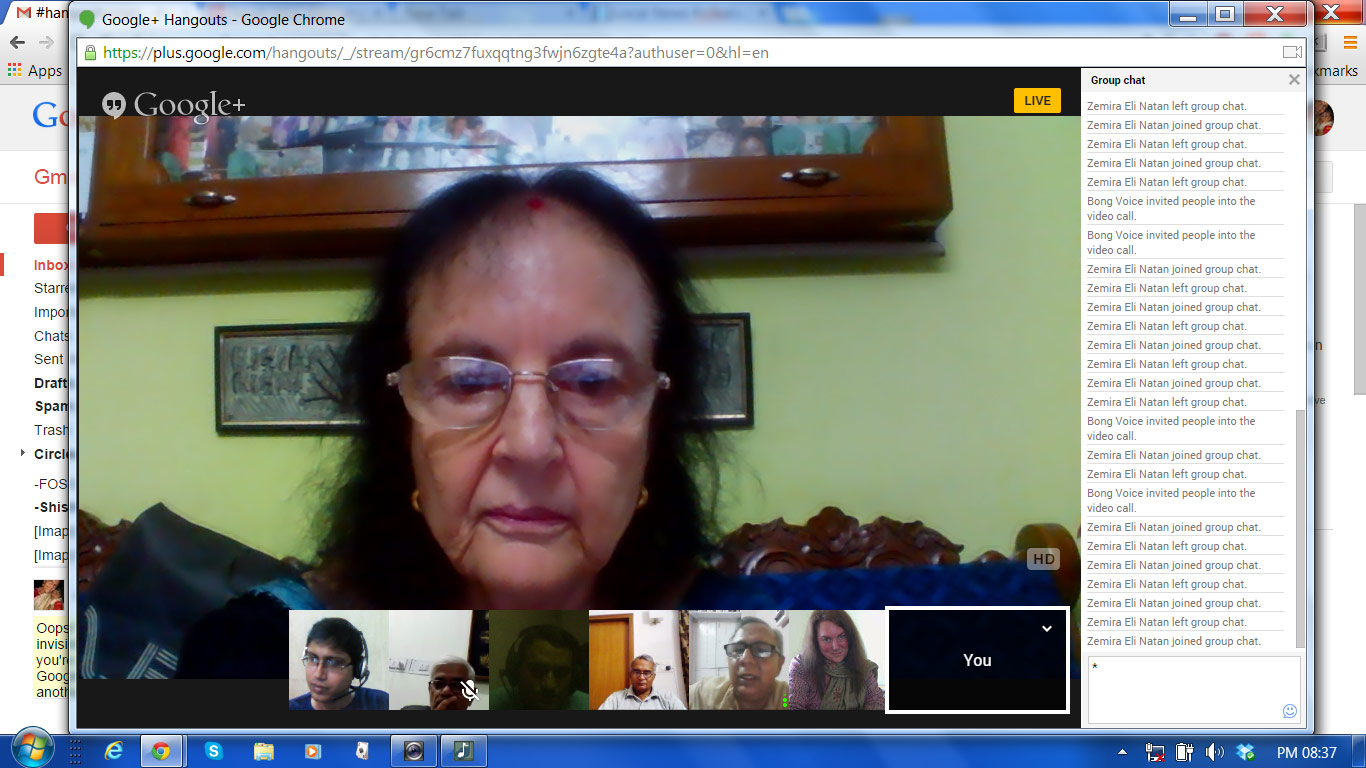
Screenshot of Panel, but my mic not recognized.

Screenshot of Panel, but my mic was not recognized.

This is an unpublished blog from 2008 that I just came across recently, and thought it timely. I had been invited to be on a live panel addressing the question, “Is the World Polarizing on the Basis of Religion?”  The audio failed so I was not able to contribute to the discussion.

Here were my thoughts at the time:

I’m writing from Kolkata, West Bengal, an Indian state currently experiencing “communalism,” roughly equivalent to what is known elsewhere as sectarianism.  I’m trying to figure out how to say what is on my mind without running afoul of the laws as they are applied here. I can be arrested for writing, saying, or tweeting something that offends the religious sensitivities of Muslims. And while the law is applicable to any religious group, the reality on the ground is that it is used as a means to protect Muslims from what and who might offend them, and that includes questioning or breaking their laws of Sharia and blasphamy.

How can we have open discussion and debate if “offending” is a crime?  “Offended?”  Who can live without being offended?  We teach our children, “Sticks and stones may break my bones, but names will never harm me.”  We know it is not completely true, but we use it to teach about restraint.  The second part of the “offended” narrative is that being offended becomes an excuse for violent behavior.   In other words, if I/we “offend” a religious group and they begin rioting, I/we are said to have “incited rioting.”  By law then, I become responsible for their feelings and their behavior due to their feeling offended. Some might think I’m exaggerating, but unfortunately I have had first hand experience with all of this.

How can we have reasoned debate if emotion is allowed to be expressed with violence?  How has rioting become a socially acceptable form of protest over hurt feelings?  For me, Kolkata changed from secular to sectarian in December 2007.  Muslims rioted in the city demanding that Taslima Nasreen a novelist, be expelled from Kolkata.  http://news.bbc.co.uk/2/hi/south_asia/7105277.stm) 

Wednesday’s trouble in the state capital began after the predominantly Muslim All-India Minority Forum called for blockades on major roads in the city. The group said Ms Nasreen had ‘seriously hurt Muslim sentiments’ “.  

The Indian army was called in.  And then I heard that people I knew personally as the most liberal and secular leadership of the Muslim community of Kolkata,were also calling for her removal!  Kolkata was no longer a secular city, and it was clear where the power lay. Just three months before, the city had come together over the murder of a young Muslim man who had married a Hindu woman.  The outrage seemed to be shared by Hindus and well as Muslims.  I remember thinking that this was something I loved about Kolkata. It was what people wanted for Kolkata.  That seems like ages ago.

More recently there were riots because a newspaper published photographs that offended Muslims. The police arrested the editors of the newspaper.  None of this is unique to Kolkata or India anymore. Moderate becomes a meaningless term in the face of violence.  And in my years in Kolkata, I’ve never heard any Muslim protests against riots against Taslima Nasreen, or against arresting editors when they publish what offends Muslims.

People pick and choose what part or parts of their religion they want to follow.  This happens in every religion.  But we don’t hear Muslims saying, “I am a proud Muslim but I am against sharia, stoning, polygamy, slavery.” or “I am a proud Muslim and I renounce violence.”  Where are the Muslim conscientious objectors?  Actually I believe they exist but they too are at risk.  But until they share their plight, they leave the world believing that Islamic Terrorism does indeed speak for Islam.  Why must they speak?  Only Muslims carry the credibility.  An Imam speaking against sharia, against beheading, against the killing of infidels carries credibility.

My evolution in thought:

I came to India thinking of it as a Hindu country. But when our children were studying Indian history in school, all of the Muslim invasions and conquests of the Hindus were described in a celebratory way.  Each period was described by whether they were good or not to the original inhabitants.  I thought, “Oh, so Hindus lost,” because it’s the winners who get to write the history books.  When I started to ask questions here, people bent their heads and whispered, “yes. but we can’t talk about it.” And that is when I started to dig deeply into the history of India, this country I have come to call home.

It’s 2023 now and I’m still not sure it’s safe to talk about so I’ll just whisper-blog for now.

The Silence of the Fathers

“Son, you are becoming a man. You will feel lust you will have to manage. If you choose to drink you may give up control and then you are nothing but a wild beast of the human jungle. A wild beast of the jungle brings shame and dishonor to your family, to our ancestors, and to other men.”

I wish I knew who said those words, or even if they have ever been said. I certainly don’t hear them being said now. I don’t hear them being said by fathers on Social Media, by the coaches on sports’ teams.  In fact the coaches seem to have been indulging in their own lust.  Today’s music, TV, films?   We live in a culture, East and West, where wanton male sexuality is admired.  Any threat to that male sexual behavior is perceived as emasculating.  It’s as though we are afraid to really lessen the power of the wild beast.  To me, this is an insult to all men, because not all men are wild beasts.  But it does seem they are rather quiet.

Like most women around the world I have my share of stories, molestation, rape (for me a knife held at my throat), college professors who lined up the girls he wanted to bed, wandering surgeons’ hands in the operating room, sexually inappropriate and demeaning remarks in the high echelons of the corporate world…

A volcano of smoldering fire has burst forth with molten lava, which by nature consumes all in proximity.  The wild beasts and gentle men become indistinguishable,  part of the problem being we don’t always see the wild beast hidden inside the gentle man.  And the gentle men seem reluctant to speak up, and organize themselves into a movement that redefines a maleness that excludes rape.  Yes there have been small groups but they never seem to grow.  Where are the Corporate Board members and the CEO’s taking leadership in wiping out sexual discrimination and harassment?  Name a University head who has pledged the same.   Is the problem that the “big fish” are the beasts?  Will strong men in leadership give up the perks of freedom to harass?  I am hoping for these leaders to pledge to raise their sons differently, and to wipe out these offenses in their companies, universities, hospitals, law firms, etc.  So far they seem unwilling.

Since the explosions have been placed in the US congress as the place of battle, I propose  a Truth and Reconciliation Commission be set up, with it’s first charge to address the secret fund of taxpayer money that has been used to settle the cases of sexual misconduct against members of congress.   Let that be public, and as in South Africa, a forum for denouncing the past and pledging to a future that is different,  What we have now is sheer hypocrisy in the Congress.

When I wrote and published, The Preteen’s First Book About Love, Sex, and AIDS, (American Psychiatric Press Inc. 1995) I wrote: “The crossing of sexual boundaries between people, whether in word or touch seems to cause deeper wounds and greater shame than any other kinds of abuse.  The person who commits the crime of sexual abuse seems to pass on the shame and humiliation to the victim.” p.76

Women are angry and hurting, triggered by one woman’s story and one man’s position, both being managed in highly politicized ways.  None of this happens on its own.  Bill Cosby has gone to jail at 81 while Harvey Weinstein and Bill Clinton walk free.  Juanita Broaddrick is silenced as are the women claiming abuse by Keith Ellison.  The conflict is bigger than black and white or right or left., socialist or capitalist.  It is at the core of every culture known to our species — what it means to be a man, what it means to be a woman.

The shame eats at us.  I am 75 but I still have places of shame which are untouched by my accomplishments in life.  How do you wash away the feeling of being soiled when a man has forced himself into your body?  How much soap?  How many years?

The wild beasts, be they doctors, professors, corporate executives — they had and have no shame.  They are often treated as though the offenses are so old they are outweighed by these men’s accomplishments and good deeds.  We women carry the shame for them and that burden has become too great to carry in silence.  There seems to be no expiration date on shame, so why should there be one for the offence?